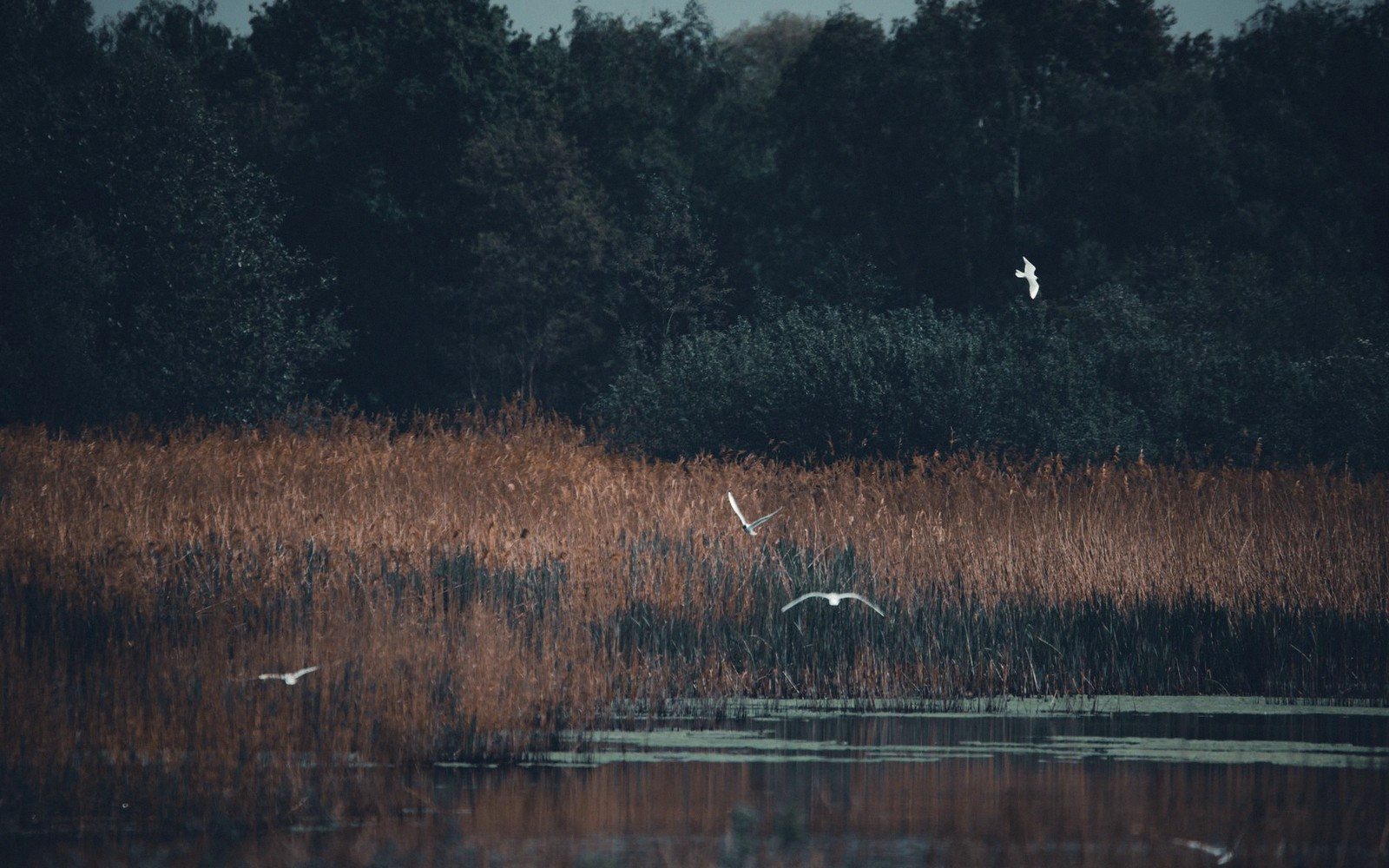
The arrivals follow a calendar of their own — and once you know the order, waiting becomes a kind of pleasure.
01The sequence
Rooks and skylarks barely count as arrivals — they have wintered here and simply become louder. The first true harbinger is the lapwing, back over the fields by late February in a mild year, tumbling and calling over furrows that may still carry frost. A week or two behind it come the cranes, pouring northward in long skeins through March, the noise of them audible long before you find the birds. Kristianstads Vattenrike, where the floodplain still holds shallow water, is one of the best places in Scania to watch them pass.
White wagtails flicker along the coast roads in early March, then common sandpipers and the first sand martins, cutting low over any open water they can find. The swallows follow, usually in the second half of April — they appear three or four days before you have noticed the air is warm enough. House martins trail them by another week or so.
The cuckoo's call lands like an announcement. It travels fast across flat farmland and is often heard in late April before the bird is ever seen. In the beech forests of Söderåsen it echoes down the ravines for weeks once it arrives. The nightingale is the companion arrival: a male sets up in dense riverside scrub and sings through the nights of May with a persistence that makes sleep feel like an optional luxury.
Among waders, wood sandpipers and ruffs pass through the wet meadows in May, often visible for only a day or two before pushing further north. Marsh harriers are back over the reedbed earlier, quartering low above the stems through April. Ospreys appear at inland lakes in May, pausing long enough to fish before continuing.
The swift closes the sequence. It arrives late — typically in the second week of May — and when it screams over a town rooftop for the first time in a given year, the season has fully changed hands. The swift's arrival does not feel incremental; it feels final.
Against this movement, the resident birds simply intensify: great spotted woodpeckers drum harder, blackbirds sing longer, the reed bunting sings from every available post in the marsh. Spring in Scania is not one event but a slow, staggered unwinding across ten weeks — each species arriving on its own terms, on roughly its own date, and the whole sequence reliable enough to watch for.
| Place | What it is |
|---|---|
| Kristianstads Vattenrike | floodplain wetland reserve, rich in migratory and breeding birds |
| Söderåsen | beech-forested ridge with deep ravines in north-western Scania |