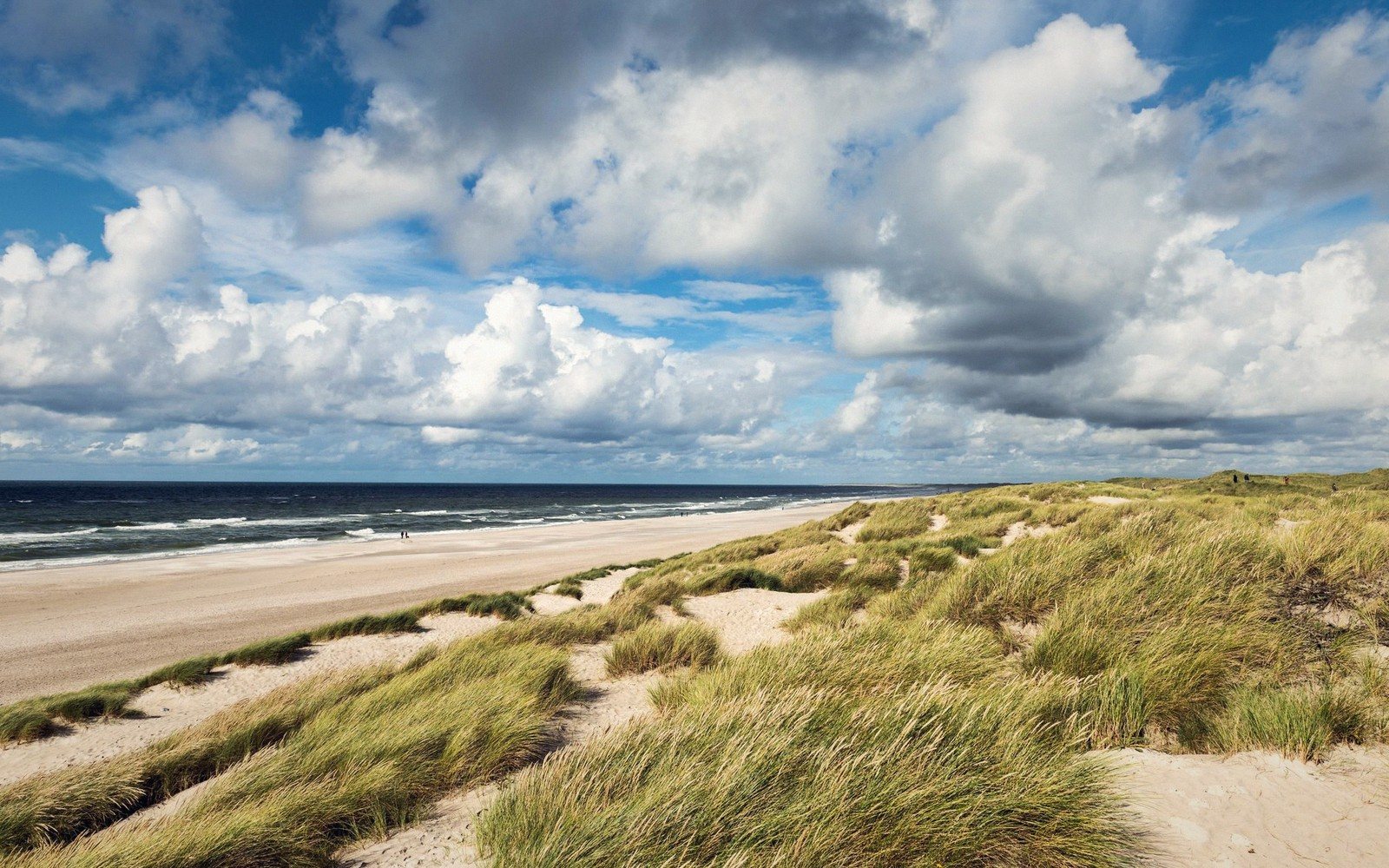
Twenty kilometres of pale sand, restless dunes and a wind that never quite stops.
01The Point at the Continent's Edge
Sandhammaren sits at the south-east corner of Scania, where the Baltic meets Hanöbukten and the coastline swings from south-facing to east-facing with barely a pause. The name means roughly "the sand hammer" — a blunt, apt description of a headland built entirely from sediment rather than rock. There is no bedrock here forcing its way to the surface, no cliff, no resistance. The land is what the sea has deposited, and the sea is still depositing it.
The sand arc running west from Sandhammaren toward Ystad stretches for roughly twenty kilometres, and across it the wind has raised a dune landscape that is among the largest in Sweden. The dunes are not fixed. Marram grass — Ammophila arenaria — anchors the newer ridges, its roots trailing deep into the dry sand, but the system breathes and shifts at its margins. After a strong south-easter, the beach is measurably narrower on one side and wider on another. The lighthouse at Sandhammaren, built in the 1860s, has watched the shoreline move around it for more than a century and a half.
Behind the foredunes, where the wind shadow allows a little more soil to form, creeping willow and sea buckthorn colonise the hollows. Further back still, Scots pine plantation — planted historically to prevent the sand from advancing on agricultural land — gives way to a scrubby heath of heather, crowberry and lingonberry. The gradient from open beach to sheltered interior covers barely a few hundred metres, but the vegetation shifts as dramatically as if it were a different region entirely.
Sandhammaren is a reliable autumn staging ground for waders and wildfowl. The exposed point concentrates birds working the Baltic shore southward, and in September and October the beach itself holds sanderling, dunlin and occasional rarer visitors from the east. The shallow, relatively warm waters of Hanöbukten make the bay productive for seaduck in winter. Offshore, long-tailed duck and common scoter sit in rafts while the wind presses whitecaps across the fetch.
Allemansrätten opens the whole sand arc to visitors. There are no facilities to speak of at the point itself — which is the point. Walking the beach at Sandhammaren, with nothing ahead but pale sand and nothing behind but marram and the occasional dark line of pine, is about as close to open country as this densely farmed province gets.
| Place | What it is |
|---|---|
| Sandhammaren | sandy headland at Scania's south-east corner, where Baltic meets Hanöbukten |
| Hanöbukten | bay on Scania's south-east coast, relatively shallow and warm |
| Ystad | town marking the western end of the long sand arc |