Where Sweden tapers to a point, and Europe's migrating birds follow it down.
01Sand, Meadow and Open Sky
The Falsterbo Peninsula is the furthest south-west that Sweden reaches — a low wedge of sand and glacial outwash pushing into the Öresund where it widens into the Baltic. The land here barely clears the water. Salt meadows lie just above the tideline, dune ridges a few metres higher still, and beyond them flat farmland stretching north toward Malmö. In a region not famous for dramatic relief, this is the flattest corner of all, and that flatness is the point: sky dominates, horizon is everything, and the light off the water comes from three directions at once.
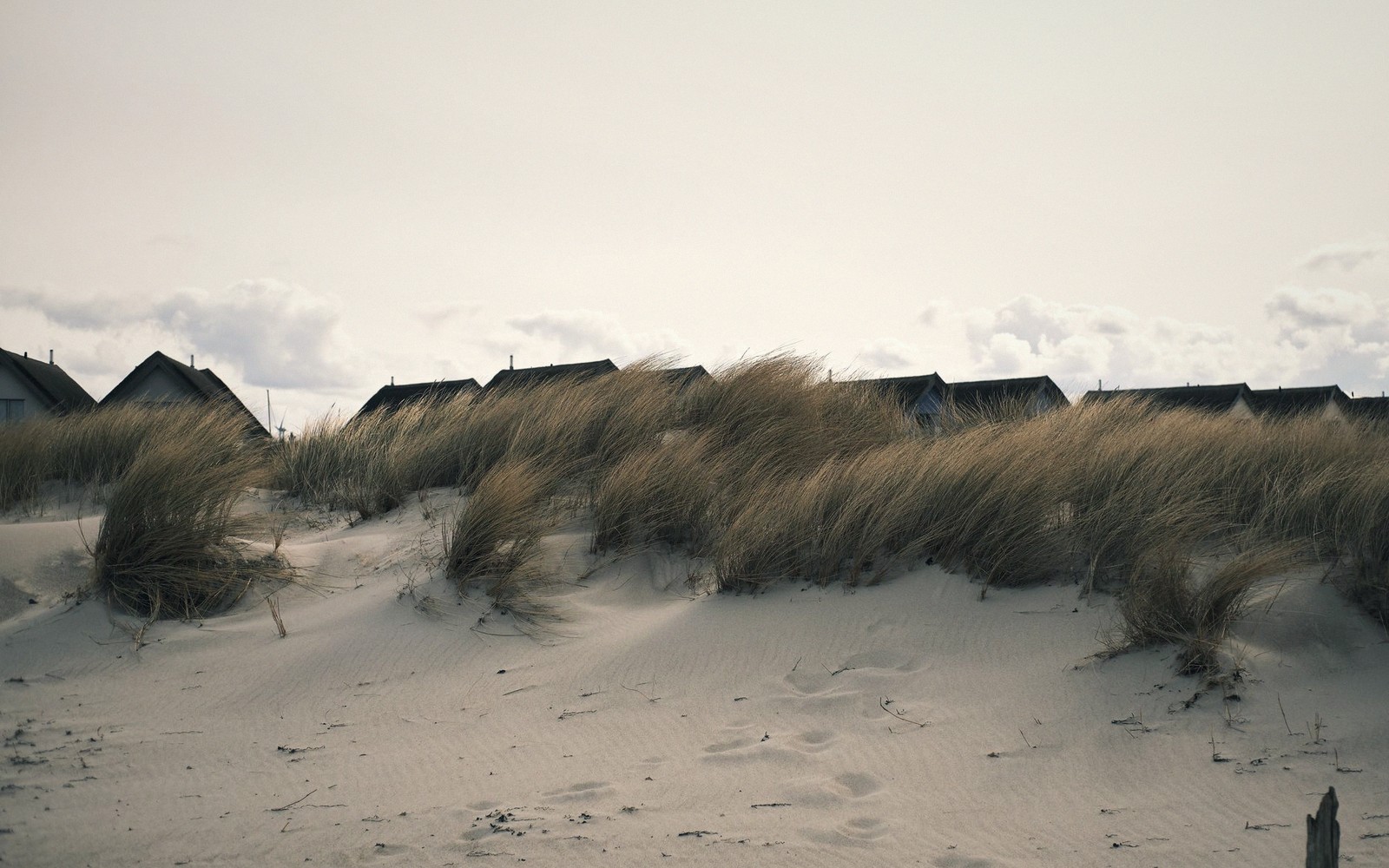
The peninsula's outline is largely the work of longshore drift. Sand moves steadily from the north-west coast down toward the tip and out to the south-east, and the beach systems at Skanör and Falsterbo reflect that ongoing shift. Dunes accumulate, blow out, reform. The outer beach at Falsterbo is backed by a ridge of older dune, stabilised by marram and sea buckthorn, and then by the golf course — one of the oldest in Sweden — which doubles, usefully for wildlife, as an expanse of short grazed turf and open rough where waders and pipits feed undisturbed.
Between the two small towns of Skanör and Falsterbo, the salt meadows of Ljungen form the ecological core of the peninsula. These are wet grasslands kept open by grazing, flooded in winter, drying through spring and summer. In early May, lapwings tumble above them; by late summer the same ground draws migrating waders down to probe the damp margins. A network of pools and shallow lagoons holds water through the season, and the combination of open sward and standing water attracts an unusual range of species for such a small area.
02The Funnel Effect
The peninsula's fame, at least among birders, is built on autumn. Falsterbo sits at the tip of a natural funnel: birds moving south-west through Scandinavia follow the coast and find themselves compressed onto a narrowing strip of land. Rather than cross open water, many species follow the shore to its end and then wait, or fly south-west across the Öresund toward Denmark. The volume of birds that can move through on a clear September or October morning — raptors, passerines, woodpeckers, hirundines — makes Falsterbo's autumn concentration one of the most significant migration sites in northern Europe.
But the peninsula rewards a visit in any season. Late April brings the first reed warblers to the reedbed at Flommen nature reserve, where grey herons nest in the willows and marsh harriers quarter low over the reedbeds. The Flommen lagoon complex is managed as a nature reserve and offers open viewing across shallow water that, in winter, may hold thousands of ducks — wigeon, teal, pochard — along with occasional rarer visitors pushed in by cold weather to the north and east.
Between the two small towns of Skanör and Falsterbo, the salt meadows of Ljungen form the ecological core of the peninsula.
03A Corner of the Map
Arriving at the peninsula, the change of register is immediate. The road south from Vellinge enters a landscape that feels more Dutch than Swedish: dykes, flat fields, occasional windmills, the sky pressing down. The two small towns at the tip — Skanör has a medieval core with a ruined castle mound, Falsterbo a slightly more open character facing west — are quiet outside summer, their streets of low rendered houses turning inward against the winter wind off the Öresund.
Allemansrätten applies across the peninsula's public land, meaning the beaches, salt meadows and dune systems are freely accessible on foot. The outer beach south of Falsterbo lighthouse is particularly worth the walk: a long straight shore of pale sand, backed by dune, with views west to the Danish coast and south to open water. In autumn the beach itself channels birds — kestrels hunting the dune ridge, merlins pursuing pipits low over the sand, the occasional peregrine gaining height from the lighthouse roof. The lighthouse at Falsterbo has operated a ringing station since the 1940s and remains one of the longest-running bird observatories in the Nordic countries.
The peninsula is never dramatic. Its quality is accumulative: small waders at close range, late light on still water, the particular silence of a salt meadow in February. It rewards patience more than spectacle, and in a region already generous with coast and sky, it is the quietest and most concentrated distillation of both.
| Place | What it is |
|---|---|
| Falsterbo | small town at Sweden's south-western tip, centre of the peninsula |
| Skanör | neighbouring town with medieval castle mound, shares the peninsula with Falsterbo |
| Ljungen | salt meadow area forming the ecological core between the two towns |
| Flommen | nature reserve on the peninsula; reedbed, lagoon and managed wetland |
| Öresund | strait between Sweden and Denmark, flanking the peninsula to the west |