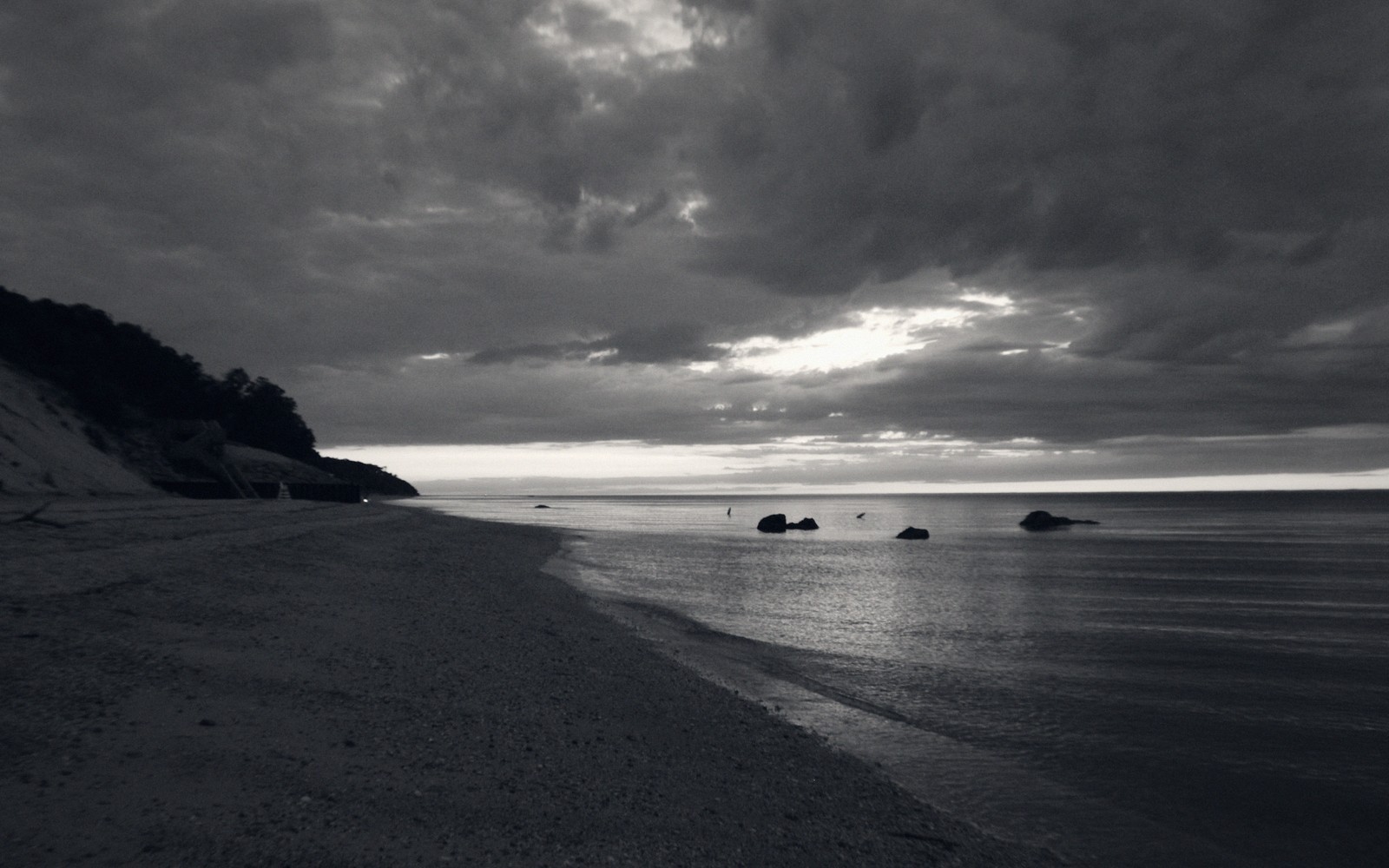
Every autumn, a sandy point at Sweden's southern tip concentrates one of northern Europe's great bird movements into a space you can stand in and watch.
01Why the Land Does This
Look at a map of Scandinavia and trace the western flyway south. Millions of birds — passerines fattened on late-summer berries, raptors threading the thermals, waders that have already come down from Arctic breeding grounds — begin moving once the shortening days and cooling nights tip them into southward flight. Sweden is a broad funnel for this traffic, wide in the north and tapering as the landmass narrows toward Scania. The region is the last solid ground before the crossing of the Öresund, and within that region, Falsterbo is the final point: a low sandy peninsula angled into the sea at the precise corner where the continent turns. A bird that has been following the coastline — or drifting westward on a north-east wind — arrives here and finds nowhere left to go except water.
That geography alone would make Falsterbo significant. But the peninsula has an additional quality: it is conspicuously flat, treeless at its tip, and framed by the Öresund on one side and Falsterbobukten on the other. When visibility is good and winds are favourable, birds move through openly, in full view, channelled between the two bodies of water. When conditions are less favourable — a westerly or south-westerly blocking the crossing, or a morning of thick autumn mist — migrants pile up on the point itself, filling the scrub, the beach ridge and the thin strip of coastal vegetation with birds that have nowhere yet to go. It is this combination — the funnelling and the occasional compression — that makes Falsterbo exceptional rather than merely good.
02The Season and What It Brings
Migration at Falsterbo is, in a practical sense, almost year-round: the last waders of spring are barely gone before the return movement begins. But the period that draws observers from across Europe runs from late July through to November, peaking differently for different groups.
Waders are first. From late July onward, adult birds returning from failed or successful breeding attempts on Arctic and sub-Arctic grounds move through the salt meadows, the shore and the wet areas at the northern end of the peninsula. Dunlin, ringed plover, little stint, curlew sandpiper and ruff are regulars; patience and a careful eye through a scope will turn up the rarer species that the same landscape occasionally produces. These movements are comparatively quiet and unhurried — a single tide can shuffle and replace the entire cast of birds on a mudflat within a few hours.
By August the passerine migration is underway in earnest. Swallows and martins stream south, sometimes in enormous numbers on fine mornings, funnelling over the lighthouse at Falsterbo's tip and fanning out over the water before committing to the crossing. Flycatchers, warblers and chats work the scrub and the scattered hawthorn. A north-easterly wind, which effectively pushes birds off the Swedish interior and out toward the western coast, is the condition most observers hope for: it concentrates drift migrants and can produce surprises — species that belong further east finding themselves on a strange headland in the low autumn light.
September brings raptors. The broad-winged species — honey buzzard, osprey, marsh harrier — move through in numbers that would have seemed improbable a generation ago. But it is the falcons that define the month: hobby, merlin and the occasional red-footed falcon can be watched hunting on the wing, sometimes in the kind of density that makes the airspace look briefly subtropical. Kestrel and sparrowhawk move in huge numbers; on strong days, counts of sparrowhawks alone can run into thousands. The ringing station at Falsterbo, which has operated continuously for decades, has documented these movements with exceptional precision, making the peninsula one of the most completely understood raptor bottlenecks in Europe.
October shifts the character again. Thrushes and finches dominate — fieldfares and redwings pouring south in great loose streams, chaffinches and bramblings ticking through the canopy, siskins and redpolls undulating overhead. In the right conditions, a morning at Falsterbo in October can feel like standing inside a tide. Woodpigeons move in numbers that press the imagination: on exceptional days, tens of thousands pass in a few hours. Common cranes spiral up on thermals before gliding out over the Öresund, their calls carrying well ahead of them.
November brings the final act — sea ducks, divers and grebes moving offshore, the last buntings and larks, and the particular stillness of a migration that is winding down. The light is low and horizontal by then, good for watching and not much else.
In practice, the site is compact enough to cover meaningfully on foot, moving between habitats as the morning progresses.
03The Mechanics of Being There
The ringing station — Falsterbo Fågelstation — is the institutional anchor of the site. It has been counting and ringing birds here since 1947, making its dataset one of the longest continuous migration records in northern Europe. Published totals for individual species across a season can be staggering, though they vary considerably year on year: annual totals for sparrowhawk, for instance, can swing by a factor of two or three between lean and productive years depending on breeding success further north and the timing and direction of autumn winds.
Watching at Falsterbo requires no special access. Allemansrätten — the general right of public access to the Swedish countryside — applies across the peninsula's open ground, and the coastal paths, beach ridges and dune vegetation can be walked freely. The lighthouse area at the southwestern tip is the traditional vantage for watching departure flights; the northern meadows and the Flommen lagoon area hold waders and waterfowl. In practice, the site is compact enough to cover meaningfully on foot, moving between habitats as the morning progresses.
Wind direction is not merely useful context — it is the central variable around which a visit should be planned. North-east and east winds push migrants toward the western coast and concentrate them on the point; south and south-west winds stall movements and can produce exceptional grounding events as birds wait for conditions to improve. A westerly at Falsterbo in late September, after a clear run of easterlies, will sometimes produce a scrub so full of waiting migrants that every bush seems to have something in it. Mist and light rain add to the effect; a clearing morning after a foggy night is often the best single moment.
04The Place Itself
Falsterbo is not a wilderness. There is a small town, a golf course, and in summer a beach resort energy that has almost nothing to do with birds. But autumn strips most of that back, and by September the peninsula takes on a quality that is specific to flyway hotspots: the sense of enormous forces moving through a small and particular place. The light changes fast at this latitude in autumn — long horizontal hours of gold and rust, then the abrupt early dusk. Birds that were invisible in scrub suddenly catch the last light on a fence-post or a wire. The shore smells of wrack and cold water.
What Falsterbo offers, beyond the raw numbers, is legibility. Migration is usually a diffuse and invisible process — something you infer from ringing data and observe in fragments. Here, under the right conditions, the whole mechanism becomes briefly visible. Raptors lift off the tree-tops, orient south, and go. Thrushes pour in from the northeast and settle into every available bush. Swallows layer the sky over the lighthouse and then, individually and in small clusters, commit to the crossing and shrink to nothing over the water. To watch it is to understand, in a way that no amount of reading quite conveys, that migration is not a metaphor or a poetic conceit — it is a physical event happening in real time, with mass and direction and urgency, and Falsterbo is one of the places on the continent where you can simply stand still and let it pass over you.
| Place | What it is |
|---|---|
| Falsterbo | sandy peninsula at Sweden's south-western tip, a major raptor and passerine migration bottleneck |
| Falsterbo Fågelstation | long-running ringing and migration-counting station on the peninsula |
| Flommen | lagoon and wet meadow area on the northern Falsterbo peninsula, important for waders and waterfowl |
| Öresund | strait between Sweden and Denmark, the water crossing migrants must make |