Scania is a small province but a seasonally restless one. Here is what its coast, woods and birds are actually doing, month by month.
01January–March: Cold Shore, Waking Wood
January is the low point of light — days only about seven hours long around the winter solstice, now behind us, but the cold deepening into the new year. The coast holds interest when the interior offers little. Scan the sea off Falsterbo or the rocky points of Kullaberg and the winter duck community is substantial: long-tailed ducks ride the swells, common eider sit in tight rafts, and on any calm morning a great northern diver may surface close inshore. The Öresund, kept largely ice-free by tidal movement, concentrates diving birds whenever freezing weather locks up the shallower bays to the east. Waders are sparse inland but purple sandpipers cling to the wave-washed rocks of the north-west coast.
Inland, the beech woods of Söderåsen are spare and legible. Every slope, every ravine and rockface is visible without its leaf canopy, and the architecture of the forest — the branching structure, the mossy boulders, the lay of the land — shows more clearly now than at any other time. Deer trails cross snow-dusted ground. A raven may call from somewhere above the rift valley.
February shifts almost imperceptibly, but the shift is real. Days lengthen by a few minutes each morning and the angle of light changes before the temperature follows. Long-tailed tit flocks begin to fracture into pairs. The first great spotted woodpeckers start their territorial drumming against dead wood, a hollow mechanical sound carrying a surprising distance through bare forest.
March is the inflection month. Early migrants — black-tailed godwits and ruffs — begin appearing on the flooded meadows of Kristianstads Vattenrike as soon as standing water remains unfrozen. Cranes move north in long, straggling skeins, their bugling audible before the birds are visible. By the last week of the month the first chiffchaffs are singing from any south-facing scrub, and in sheltered coastal corners the blackthorns whiten before a single leaf has opened.
02April–June: The Full Green Arrival
April accelerates. The beech wood goes through its annual sequence with a precision that rewards attention. First the wood anemone carpets arrive — a white ground layer that covers the forest floor while the canopy is still bare. The anemones have perhaps three weeks before the beech leaves close the light; they measure it well. At Söderåsen this display coincides with the last of the spring migrants moving through: redstarts, pied flycatchers and wood warblers all arrive in April, using the bare canopy as a perch while the insects are still slow.
The coast at the same time is running migrants northward. Falsterbo, which concentrates birds on both passages, sees its spring movement differently from autumn — less the dramatic raptors, more the waders and passerines that thread through in waves. A sustained southerly wind will park large numbers of common redstarts, northern wheatears and white wagtails along the beach ridges. Off Sandhammaren, common and Arctic terns are moving up the coast, their yelping calls marking the passage before the birds are easy to see.
May is the fullest month. The beech canopy closes in the first two weeks, the forest floor dims, and the sedge warblers, reed warblers and marsh harriers settle into Kristianstads Vattenrike for the breeding season. On the heathland patches of the south-west, tree pipits parachute-sing above the gorse. Offshore, the sea begins its slow warming. Harbour porpoises, present in the Öresund year-round, become more visible in calm spells as the water clears.
June is long-lit and surprisingly quiet in the woods once breeding is established. Warblers sing from deep cover; the forest is green and dense and hard to read. It is a month for coast and open water. The beaches south of Ystad and the dune systems around Åhus fill with nesting common terns on offshore sandbanks. The rapeseed has turned and faded by now — the yellow surge that covers the plain from late April is over by June's first week — and the fields shift through green toward the first hints of harvest gold.
Hirundines — barn swallows, house martins, sand martins — begin gathering on wires and reed edges, restless and accumulating.
03July–August: High Summer, Early Movement
By mid-July, summer is already tipping. The first southbound waders begin appearing on the mudflats and wet margins — wood sandpipers, green sandpipers, little stints later in the month. These are mostly failed or early-finished breeders from the north, and their arrival is a quiet signal that the season's axis has shifted before most visitors register it.
The coast is at its warmest and most visited. Sea surface temperatures in Hanöbukten and along the sandy south coast peak in July and August, and the shallow bays — Skälderviken on the north-west, the long arc of beach east of Sandhammaren — are at their most accessible. Eelgrass beds close to shore hold feeding flocks of mute swans and brent geese moving through in August. The heathlands on the sandy soils of the south-west are in heather bloom — patches of dull purple among the bracken, brief and worth catching.
August is the month to start watching the sky. Common swifts, which screamed over every Scanian town from late April, fall silent and disappear by early August, their abrupt exit always slightly shocking. Hirundines — barn swallows, house martins, sand martins — begin gathering on wires and reed edges, restless and accumulating. On clear evenings at the end of the month, the first visible raptor movement can be detected over Falsterbo: honey buzzards, marsh harriers, ospreys.
04September–October: The Great Southward Push
September is the most dramatic month for anyone watching birds move. The mechanism at Falsterbo — a peninsula narrowing to a sandy point, with the Öresund as a barrier that soaring raptors are reluctant to cross — concentrates the southward flow in a way that makes migration visible and almost countable. On a clear morning with a north-west wind, thousands of raptors can pass the point in a single session: buzzards in their hundreds, sparrowhawks streaming low over the dunes, honey buzzards still moving through in early September, red kites building through the month.
Away from the point, the wider countryside is in motion. Woodpigeons and chaffinches stream south in long loose flocks through October. The beech woods of Söderåsen and the ridge country begin their turn — the beeches go from green through yellow-gold over the course of three to four weeks, a gradual dissolve that peaks in mid to late October. On calm mornings when mist fills the rift valleys and the beech crowns catch the low sun, the interior of the province looks nothing like itself in summer.
The coast in October is raw and rewarding. Sea-watching from Kullaberg or the headlands of the north-west produces divers, skuas, and occasional rarities driven in by Atlantic gales. The gannets, moving south in long lines offshore, are one of the reliable pleasures of an October sea-watch — white birds with a purposeful, angled flight, often too far out to count precisely but present in numbers.
05November–December: The Province Empties Out
November pares back fast. Most summer migrants are gone and the winter community assembles: fieldfare and redwing thrushes arrive from Scandinavia in October and linger into November, working their way through hedgerow berries. Whooper swans appear on the larger lakes and slow-flowing rivers. The Öresund gains its winter ducks again. Hen harriers begin to roost communally in the reedbed patches of the south and east.
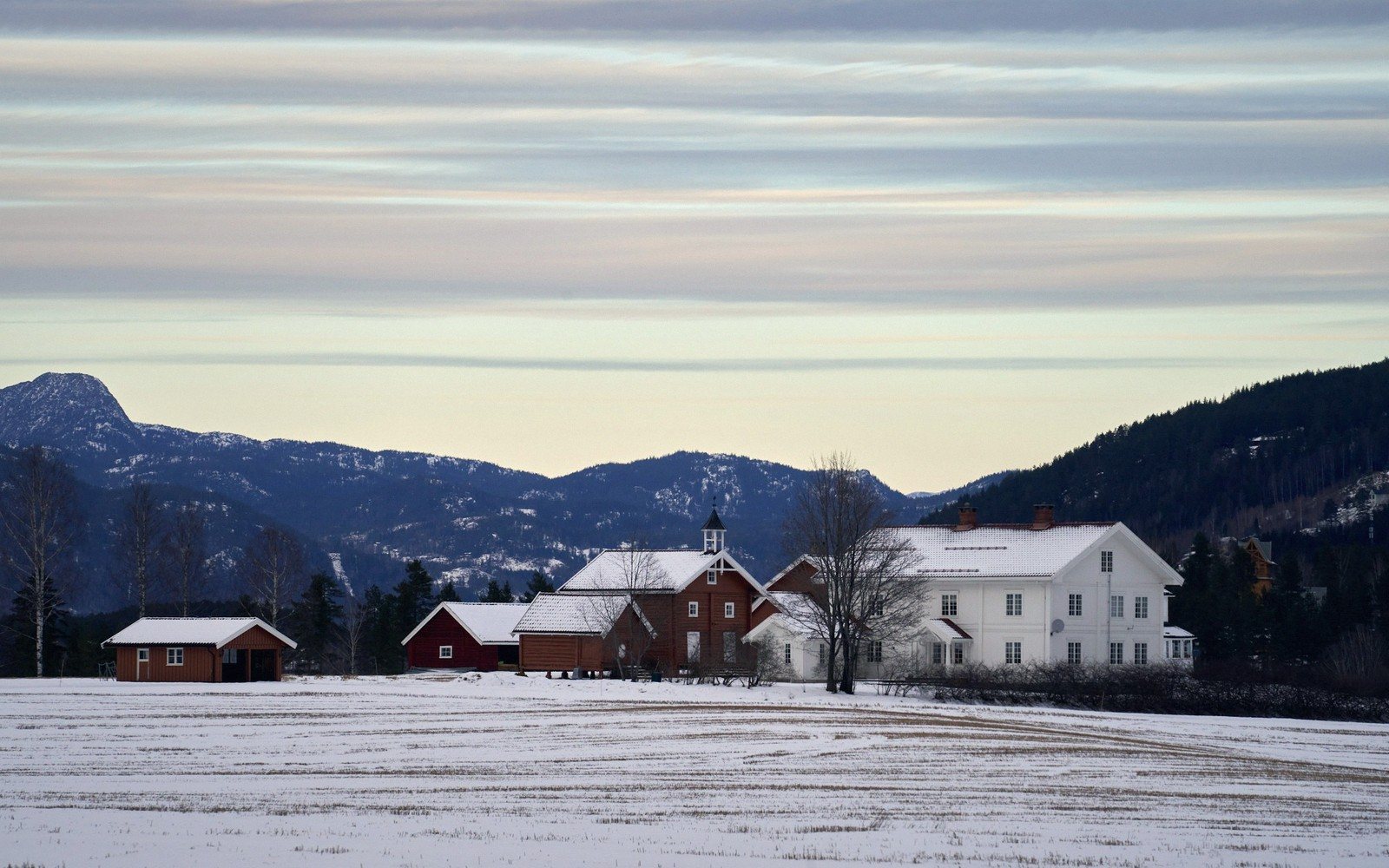
The light in November and December is the province's most considered — low, lateral and unobstructed on the flat agricultural plain, hitting the white chalk churches and the pale farmsteads at angles that transform them. Sunsets over the sea at the south-west coast last a long time when there is no horizon higher than the water. The beech woods are stripped bare again by late November and the interior has returned to its winter legibility: clean, quiet, traceable.
December brings the solstice and the full closure of the year. The coast holds birds. The woods hold silence. The plain holds light. They will do so until the godwits and the cranes arrive again and the whole rotation begins once more.
| Place | What it is |
|---|---|
| Kristianstads Vattenrike | UNESCO Biosphere Reserve, wetland complex around Kristianstad |
| Falsterbo | south-westernmost peninsula; Sweden's premier raptor-migration watch point |
| Söderåsen | national park on a beech-forested rift-valley ridge in north-west Scania |
| Sandhammaren | sandy south-east headland, key point for seabird and coastal migration |
| Hanöbukten | large bay on Scania's south-east coast |
| Skälderviken | shallow bay on the north-west coast between Helsingborg and Ängelholm |
| Kullaberg | rocky peninsula and nature reserve, north-west Scania |
| Åhus | small town on the east coast amid extensive coastal dunes |