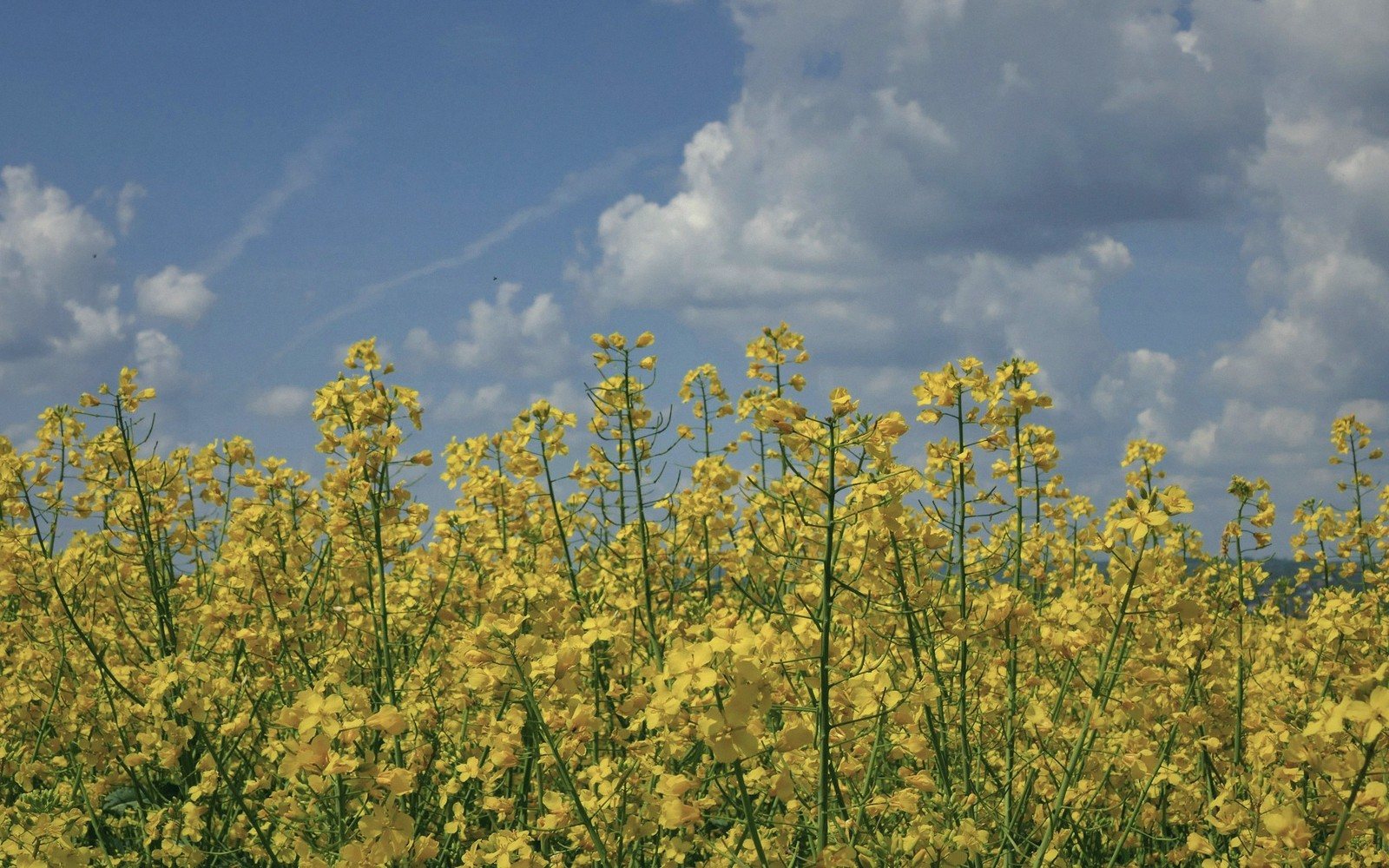
Why the fields turn yellow in spring, how long it lasts, and where to find the best of it.
01The biology behind the colour
Oilseed rape — Brassica napus, called raps in Swedish — is one of Scania's major arable crops, and for three to five weeks each spring it converts the province's flat, open farmland into something close to unbroken yellow. The timing varies with the weather but the sequence is consistent: the fields in the south and along the coastal plain typically open first, often in late April, with the inland plateau and the slightly cooler north following a week or two behind. At the peak you can stand on any ridge between Malmö and Helsingborg and have yellow in every direction to the horizon.
The colour comes from four petals arranged in the cross shape that names the Brassicaceae family. Each plant carries dozens of flowers and millions of pollen grains, which is why the scent during warm, still weather is so thick and sweet — and why the season is difficult for hay-fever sufferers. The bloom lasts only as long as pollination demands; once the petals fall, the green seed pods that follow are unremarkable, and within weeks the fields look like any other crop.
02Where to see it well
The southern plain between Ystad and Malmö sits in some of the most intensively farmed land in Sweden, and here the rape fields are vast — often unbroken for a kilometre or more. The low ridgeline behind Sandhammaren gives a useful vantage point east of Ystad. Further north, the open country either side of the Söderåsen ridge offers a clear contrast: yellow fields in the valleys and the dark edge of beech canopy above. The Kristianstads Vattenrike area, where flat farmland meets wet meadow and the Helgeå river, is worth timing carefully — the yellow of the crops against the fresh green of riverside willows is as good as it gets.
Cycling is the right way to move through it. Scania's network of minor roads and farm tracks — accessible under allemansrätten's spirit if not strictly its letter, where paths exist — puts you at field level and inside the scent. Any route that crosses the interior plain between late April and late May will pass through it.
Miss the window and you miss it entirely; it will not look the same again until the following year.
03How long it actually lasts
Three to five weeks from first flower to petal fall is the working figure, but a warm spell can compress this to three weeks; a cool, overcast May can stretch it. The peak — when more than half the field is in full flower — lasts only ten to fourteen days. Miss the window and you miss it entirely; it will not look the same again until the following year.
| Place | What it is |
|---|---|
| Brassica napus | the botanical species name for oilseed rape |
| Kristianstads Vattenrike | wetland biosphere reserve east of Kristianstad, where farmland meets river meadow |
| Söderåsen | beech-forested rift-valley ridge in north-west Scania |
| Sandhammaren | sandy headland on Scania's south-east coast |